During our time in Tokyo last week, we spent 2 nights in Kyoto in the middle.
Bullet Train: Shinkansen
One of my son’s goals for Japan was to ride a bullet train, or Shinkansen. We picked the Nozomi Shinkansen, which are the fastest and traveled between the two cities in just over 2 hours. It was definitely moving fast!
There are many bullet train time options heading to/from Kyoto, so you can pick the best timing for you. While you can buy at the station, I suggest buying ahead of time. If you want a chance to see Mt. Fuji, pick the E seats both directions (these are sets of two–ABC on one side and DE on the other). We chose a 7 am train out of Tokyo to optimize time in Kyoto. This is where our hotel being right by Tokyo Station really helped. We left our hotel at 6 am, got breakfast at the station (McDonald’s), and then found our station. We could have done less time and been fine. At the tracks are little convenient stores with some Japanese style boxed breakfasts and various snacks, which is also an option. You can bring food onto the trains if you prefer to eat on the train.
We connected our IC Welcome Suica cards to the train app and our tickets, so we used those to enter the station. If you don’t, then everyone needs their own phone and app or you can print them at kiosks at the station. Connecting your Suica card is the easiest.
At the track, find the area labeled for your car number and then check the maps on the gates to see which end of the car your seats are closest to. From Tokyo Station, the train waits much longer as it’s the first stop and it arrives earlier. At Kyoto Station, it just drops off/picks up and only stays about 2 minutes, so you want to be ready.
Luggage on the train must fit in front of you at your seat or in the overhead bins. Oversized luggage has additional rules and you can pick seats when booking that have extra luggage space. We chose to leave our larger luggage at our Tokyo hotel and travel to Kyoto with only backpacks and one smaller duffle. Not having luggage with wheels made everything easier and they were easy to transport. Luggage transport is also very popular in Japan and sometimes hotels can arrange. At the very least, they can recommend transport companies who transport the luggage for you if you’re not returning to the city.
The train has wifi and trays like an airplane. There was plenty of leg room and the window shades go down as well. There are bathrooms and trash cans between train cars and the locations are marked on the seat backs.
Once in Kyoto, we navigated to our hotel. Kyoto Station is massive and it takes a while to get out! Make sure you know which direction you need to exit. We dropped off luggage at our hotel for storage and set out exploring as it was only 9:30 am.
Kyoto Lodging
We stayed at Hotel Keihan Kyoto Grande, which was very near the station and had an underground connection option right by it if it was raining. We booked connecting rooms, so had 2 twin beds and a bathroom in each room. I found the beds harder than the ones in Tokyo, though not as hard as some hotels we’ve stayed at!
The breakfast buffet was included in our rate. It had a mix of Western and Japanese options, such as sushi, fresh fruit, pancake maker, roast beef, ginger pork with sautéed peppers, salad, porridge, bakery breads, meatballs, etc. There were also juices, tea, coffee, sake, and wine. My husband says the coffee was not good.
At check out on our final day, we used the self-storage luggage option to pick up later. It had lockers for small and medium bags and chains for larger luggage. It was very convenient to grab later as we headed to the station for our train.
The hotel is right next to a mall with various food options, as well as a 7-11 and a Don Quixote discount store. The station also has many food options. It was a good location.
What We Did
Kyoto Day 1–early bullet train to Kyoto, Nijo Castle, Imperial Palace (unfortunately it was randomly closed), Arashiyama Bamboo Grove and Tenryu-Ji Temple gardens and exploring area near Togetsukyo Bridge and Katsura River
Day 2–Fushimi Inari hike, Ninenzaka Street, Yasaka Pagoda, chopstick making class, walking around Gion on Hanamikoji Street and Pontocho Alley, Nishiki Market
Day 3–Samurai and Ninja Museum tour and experience, walk around area, 2 pm bullet train back to Tokyo
Thoughts on the Sites
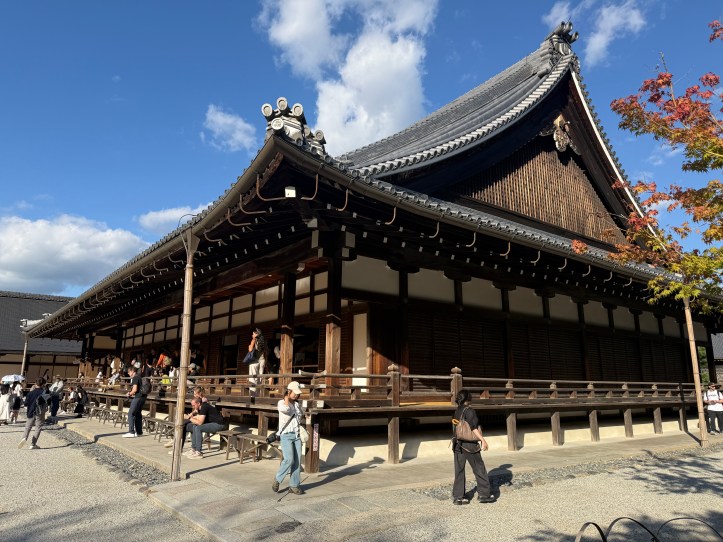
Nijo Castle-definitely worth seeing. It’s a nice break from shrines and temples and adds to your historical understanding of Japan. It comes with a nice brochure with information and the signs throughout are in English and Japanese. There are various ticket options for Nijo Castle (essentially the grounds) and then palace add-ons. We added on Ninomaru Palace. The focus in there is the art on the walls as there is very little furniture. It was fairly crowded. DS10 found it boring and too packed as the path is narrow, but the rest of us liked it. Honmaru Palace is another optional add-on that must be booked ahead of time. We did not do that one, but I believe it is more impressive than Ninomaru. We really enjoyed the castle grounds and the beginning of changing leaf colors (we miss fall!).
Near Nijo Castle is Kyoto Sanjo Shopping Street. It is covered and has some shops and restaurants. The Gelateria was popular with DS10 and Kyoto Keizo had the Mont Blanc DD13 wanted. We also had lunch on the street.
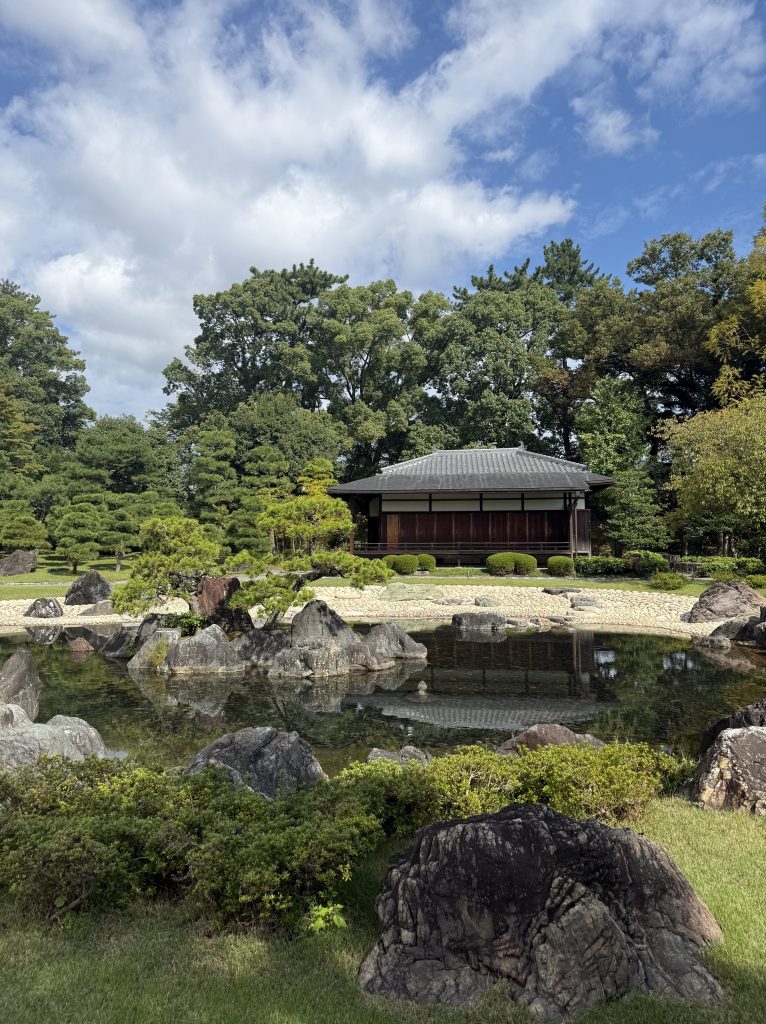
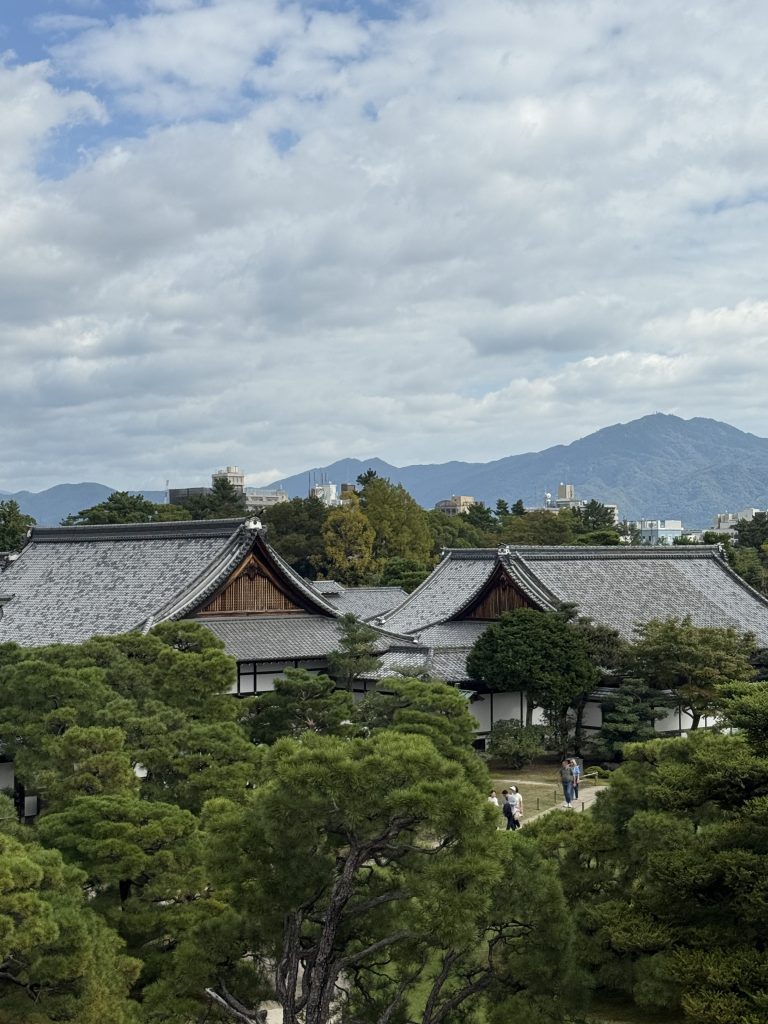
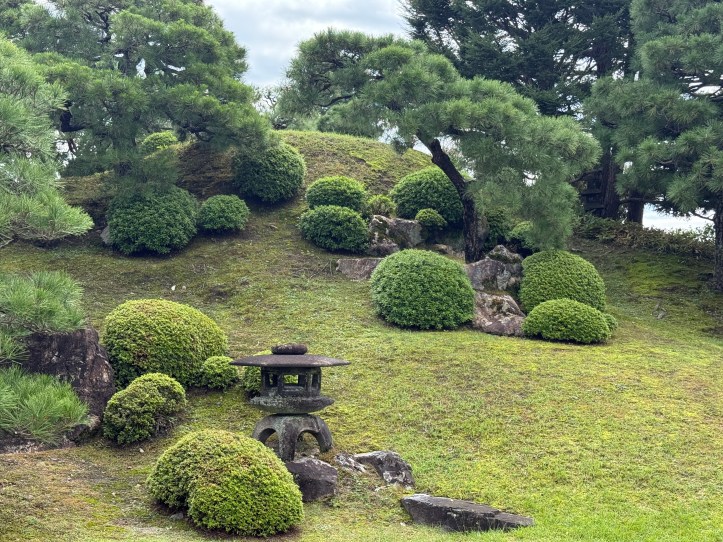
Imperial Palace–We tried to see this, but it was randomly closed. The palace itself is not open to the public, but the palace gardens normally are, which is what we tried to see. The palace is within a larger park, which is open if you just want green space.
Arashiyama Bamboo Grove Area–Visiting here includes a variety of options, all of which I enjoyed.
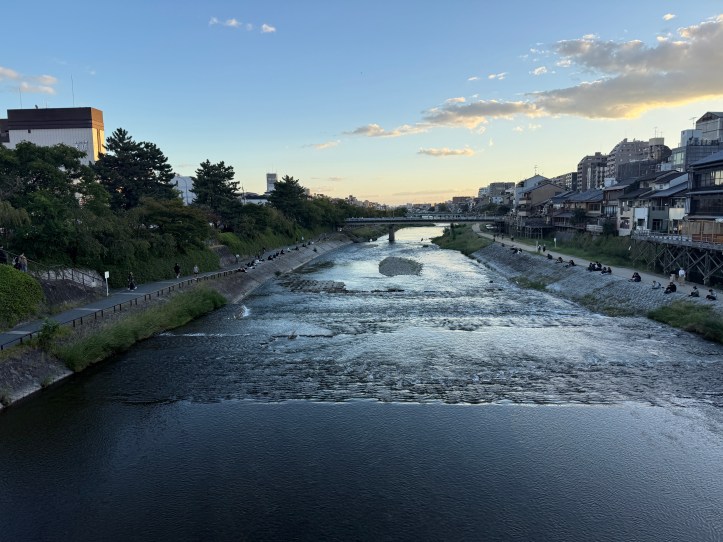
**Togetsukyo Bridge and Katsura River–a scenic water overlook with walking paths along the water. Pretty spot for photos and views.
**Shopping Street near Arashiyama Tram Station–this street is where our taxi dropped us off when we asked for the Bamboo Grove. It’s lined with shops, cafes, restaurants and plenty to do. The Tram Station is right on that street and the Saga-Arashiyama JR station with more trains is not too far a walk if you’re coming by public transport. DD got her second Mont Blanc of the day-this time with icecream and DS and I tried honey croissants with ice cream. There was also a great Sake place where DH and I did a tasting and bought some sake bottles to take home. Fun area to wander and do some shopping and nibbling.
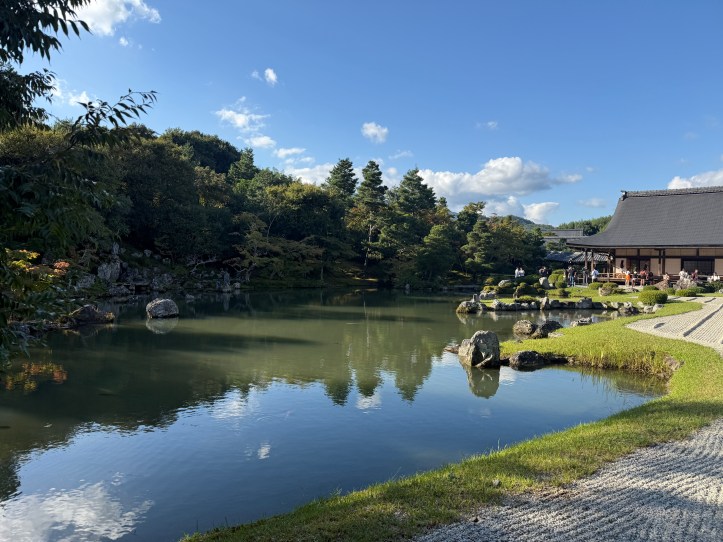
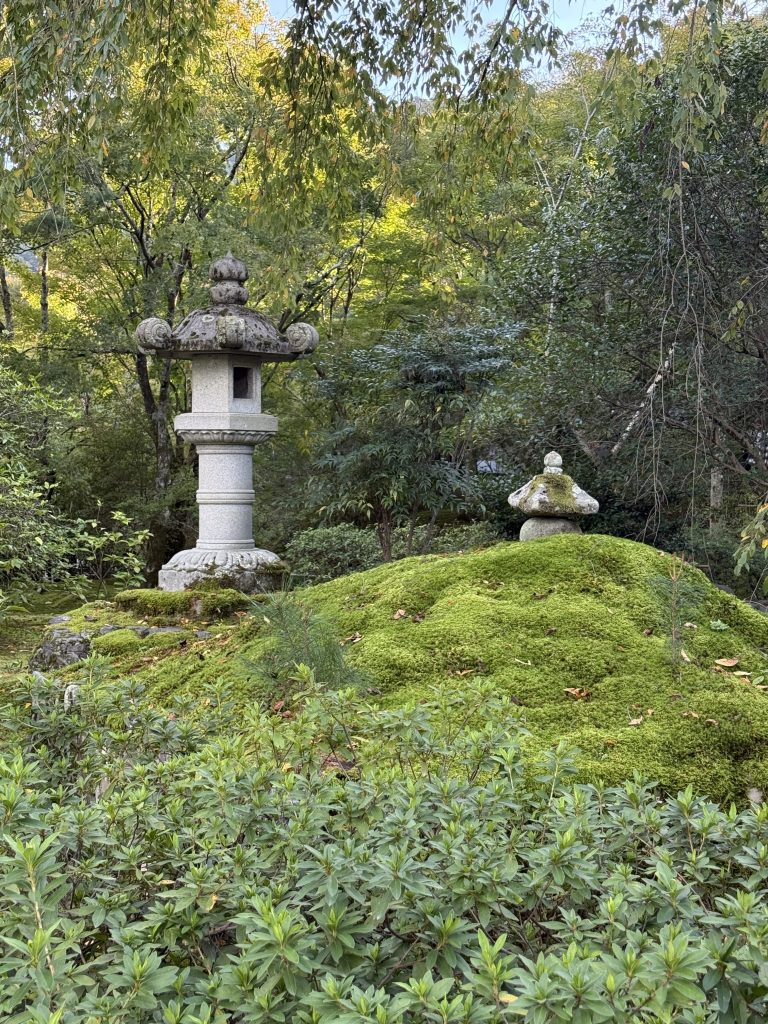
**Tenryu-Ji Temple gardens–The path to the temple connects from the shopping street. You can buy tickets for just the gardens or for access into the buildings. We did just the gardens as my kids were out-shrined and we could still see the outside of the buildings. The gardens were beautiful and had various winding paths. Very peaceful and shaded area, especially when you move away from the buildings. If you work your way up hill, you’ll come out to the exit very near the bamboo grove. If you chose not to buy garden tickets, you can access the bamboo grove from a different street.
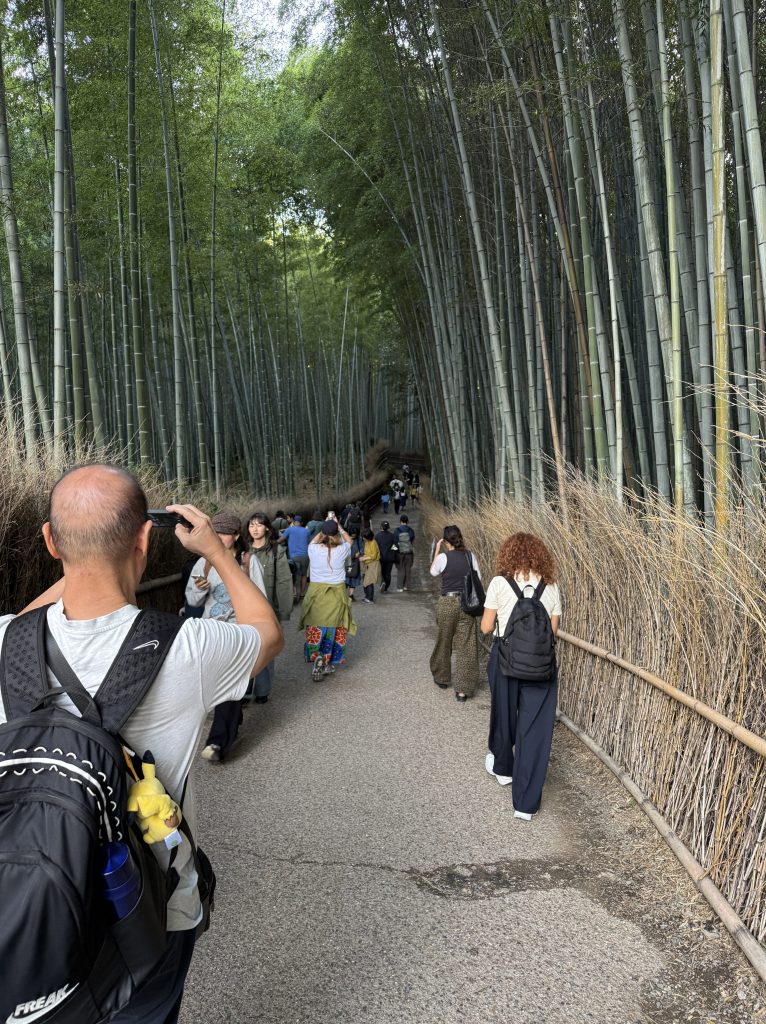
**Arashiyama Bamboo Grove–this was PACKED. The bamboo walk is quite short and was full of people, all trying to take photos. If your priority is photos along the walk without tourists, get there super early. Once through the grove, there is regular forest walking paths and view points, though we didn’t do those. The grove is cool, but incredibly touristy. I enjoyed the temple gardens and shopping street much more.
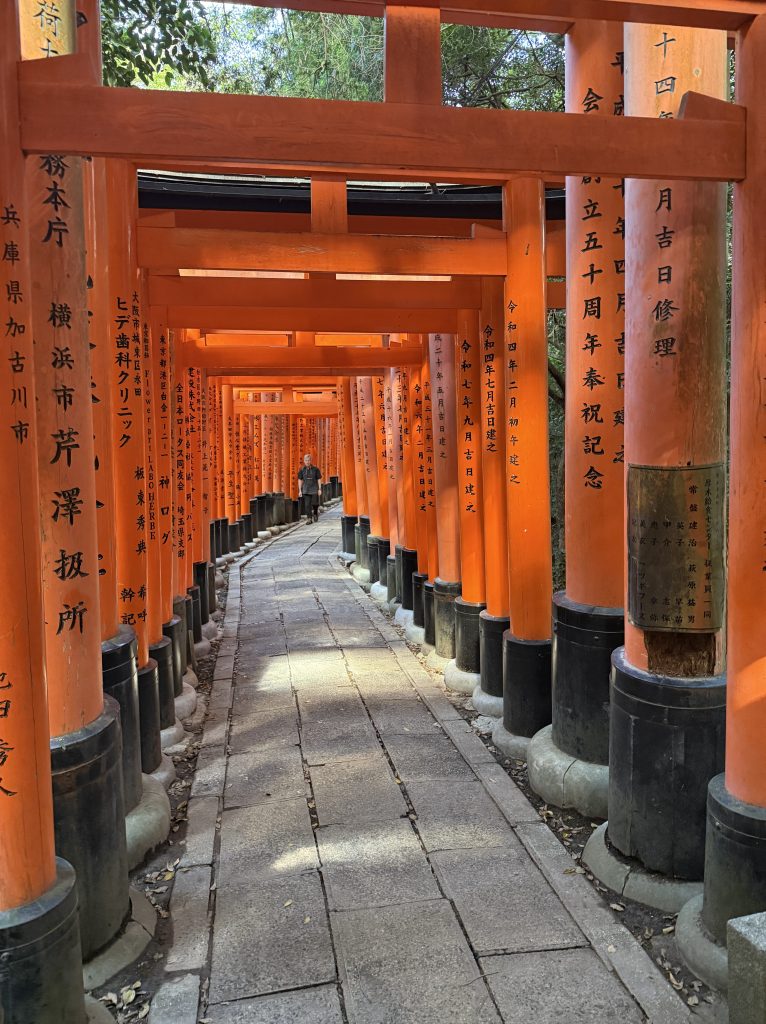
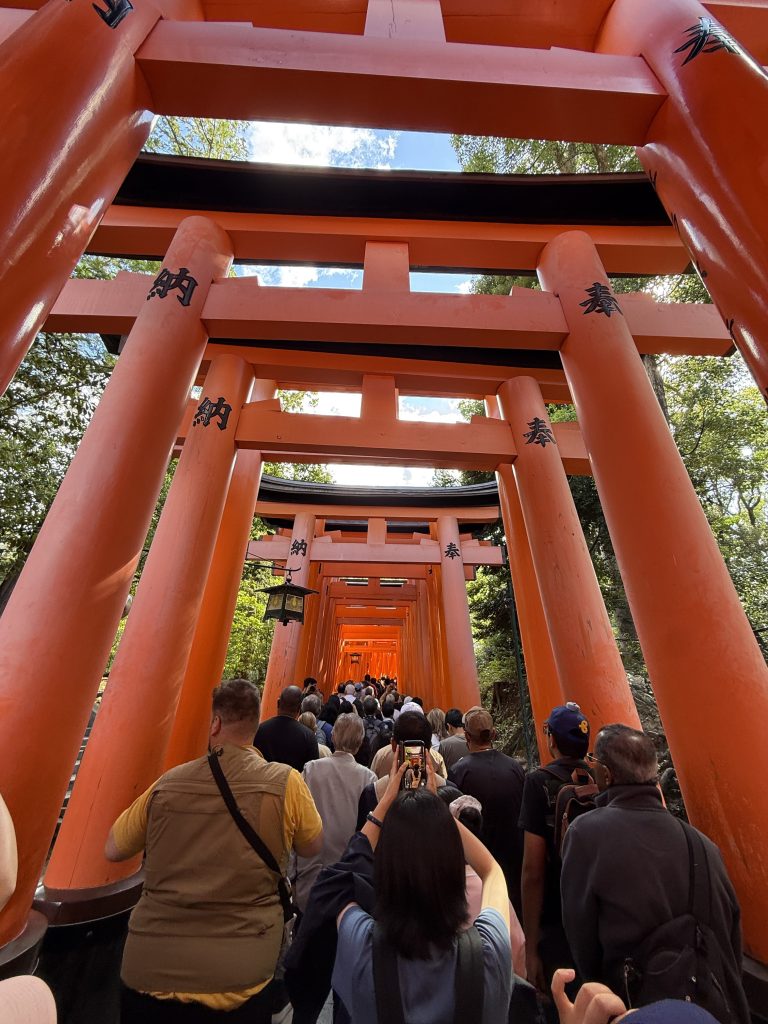
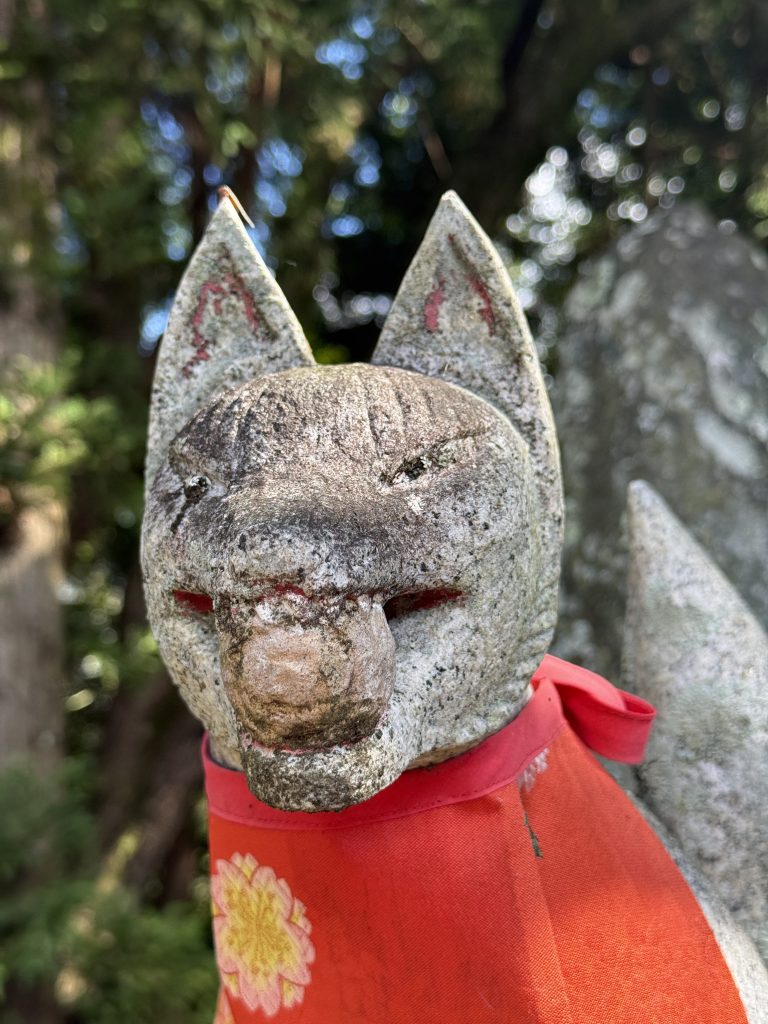
Fushimi Inari–this is one of the most photographed areas in Kyoto with its lines and lines of red torii gates. It is also super packed, but we decided it was worth braving the crowds for something so recognizable. If you feel like a very very early wake up, you could get there at sunrise as it is open 24/7. We decided to just be one with the horde and got to the Fushimi Inari station about 9:30, along with the rest of humanity. The station conveniently lets off right at the entrance to Fushimi Inari. Follow the crowds as you start to walk through the gates past the main shrine. It is VERY slow moving and close quarters. Prepping kids ahead of time for the crowds is helpful. Keep moving up and following the torii gates. Sometimes there are multiple directions to pick from as some paths lead you back down.
Note of warning–the top of the mountain is pretty anticlimatic. It was a lot of stairs and moving up and then the top was a small shrine with no views. We were hoping for great views of Kyoto and a broader expanse. There is a view point on the way up, but none at the very top.
There are various shrines along the way, and areas to stop for snacks. If you plan to go up to the top, we exited the station to start our site visit at 9:30 am and got back to the bottom about 11:45 am. This included a few stops for photos, a bathroom break, and slow moving. You can also see plenty of torii gates without going all the way up.
The area around Fushimi Inari’s entrance has food and shops.
Ninenzaka Street and Yasaka Pagoda Area–This street and the road towards Yasaka Pagoda have many shops and cafes. We ate at Kyoto Bistro, which had a wait, but the food was good. Not a fast meal process, though. We needed a sit-down restaurant after all the walking at Fushimi Inari. The streets are scenic and the pagoda was pretty. We bought some great matcha powder and tried some treats. Also did some souvenir shopping.
Kiyomizu-dera and Otowa-no-taki Falls–we did not visit here, but it is nearby and another popular tourist spot. It can get very packed and includes an uphill walk to reach and we’d reached our limit of crowded tourist areas for the day. It is a Buddhist Temple that has great views and is very picturesque. The walk to/from it is supposedly very nice as well.
Chopstick Making Class–We had a lot of fun doing this and it was a great break from normal tourist sightseeing. There are many options, but I linked the one we booked through Viator. The base rate is very cheap, but be prepared for upsells on better quality wood or engraving your name on them. Two basic types of wood come with the booking. We used those–they are soft and easy to carve, but also less durable so we’ll see how long they last. Wood upgrades start at 2500 yen. We did get them engraved, which was 2200 yen per person. An instructor teaches you how to work the wood and assists as needed as you move through the process. Despite other tourists being present, each group gets to move at their own pace, which was great. You carve the wood, sand it down and oil it. Took about an hour. This was near Yasaka Pagoda.
Gion on Hanamikoji Street and Pontocho Alley-Hanamikoji Street has many shops and restaurants along it. There are also many alleys coming off it to explore. After crossing the bridge (pretty river views), you can access Pontocho Alley, which is very narrow. It is full of bars and meat-focused restaurants, but we walked it for the architecture and vibes. Also near this area, just before the bridge and a block north of Hanamikoji Street is Shirakawa Canal, which is very quaint.
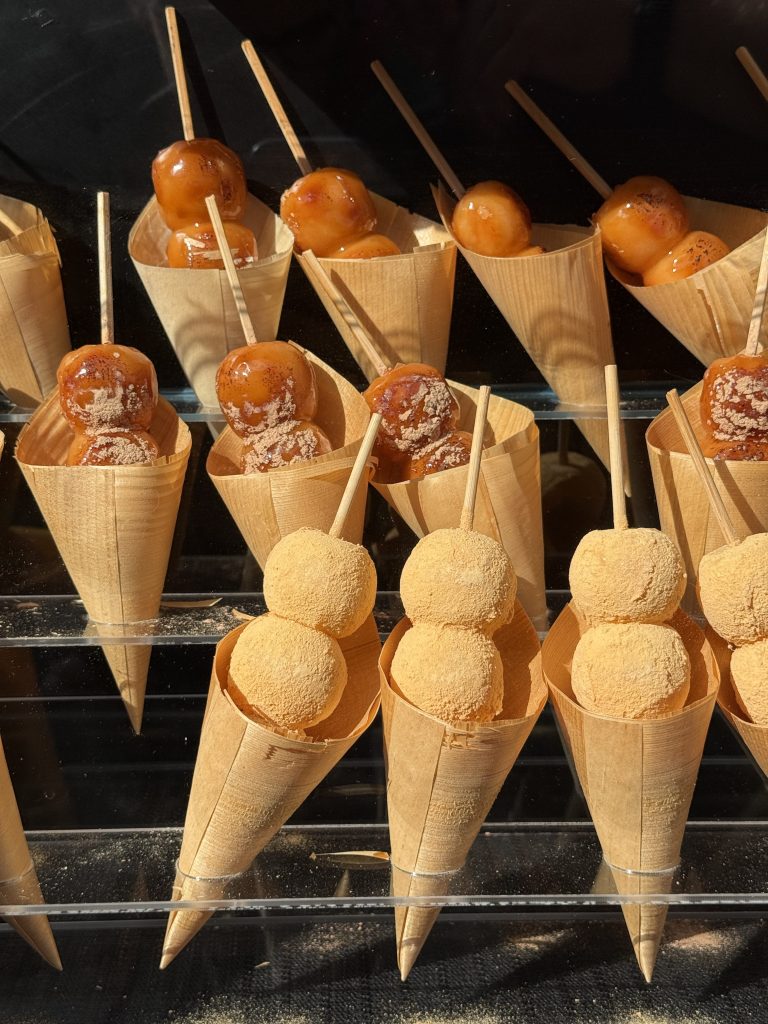
Nishiki Market-this is a covered market area with a ton of food and shops. It was very packed when we were there. Japanese don’t tend to walk and eat, so you’re expected to eat the food you buy right in front of the stall.
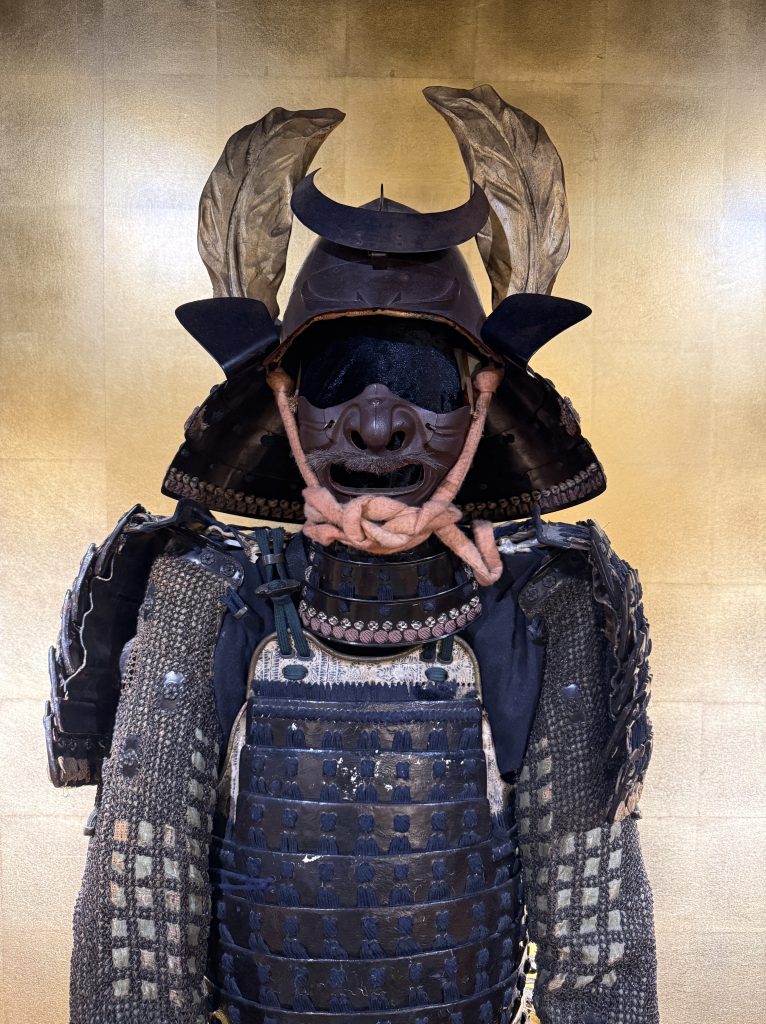
Samurai Ninja Museum-This was a last minute addition to our trip because the men-folk demanded swords. You need to prebook tickets (walk-ins may be allowed if space). It starts with a tour of the museum, which includes seeing the artifacts and getting to hold models of various items. You also try ninja-star throwing, have time to explore the museum on your own (LOTS of signage to read), and pose in Samurai costumes for photos in front of back drops. The museum was well-done. We spent about 1.75 hours there.
The Museum of Kyoto–We didn’t visit here, but it was on our list as a possibility. There are permanent and temporary exhibits. It is near the Samurai Ninja Museum.
Kinkaku-ji Buddhist Temple-This one is a bit farther away from other sites. It is a popular temple for photographing as it is golden and reflects in the water nearby. We decided not to make the trip up there, but it would be a good choice for some.